
Refreshing your borders: a naturalistic planting approach
- Craig Davis

- Oct 10, 2025
- 4 min read
Updated: Jan 16

Homeowners in Kingston and Surbiton often turn to Flourish Landscaping when their gardens are overtaken by vigorous plants like butterfly bush, cherry laurel, self-sown sycamore, and green alkanet.
These gardens frequently suffer from waterlogged conditions due to south-west London’s heavy clay, blocked drains, or inadequate drainage, leaving the soil compacted and poorly aerated.
Even in overgrown gardens, we find valuable elements to retain and reshape, using them as a framework for new designs. This balance of renewal and respect is central to the Flourish approach. We specialise in naturalistic planting, creating flowing, wildlife-friendly gardens that are beautiful year-round and suited for modern family life.
Naturalistic Planting
Naturalistic planting represents a contemporary approach to garden design that works in partnership with nature rather than attempting to control it. This philosophy traces its roots to William Robinson’s groundbreaking 1870 publication 'The Wild Garden', yet has found bold, modern expression through the work of pioneering designers such as Piet Oudolf, Dan Pearson, and Sarah Price.
The naturalistic garden is a plant-driven approach to landscape design that has evolved from its Victorian origins into a global movement, with signature projects demonstrating how to re-wild urban spaces through ecstatic sweeps of perennials and grasses.
The perfect marriage: period properties and contemporary planting and respecting architectural heritage
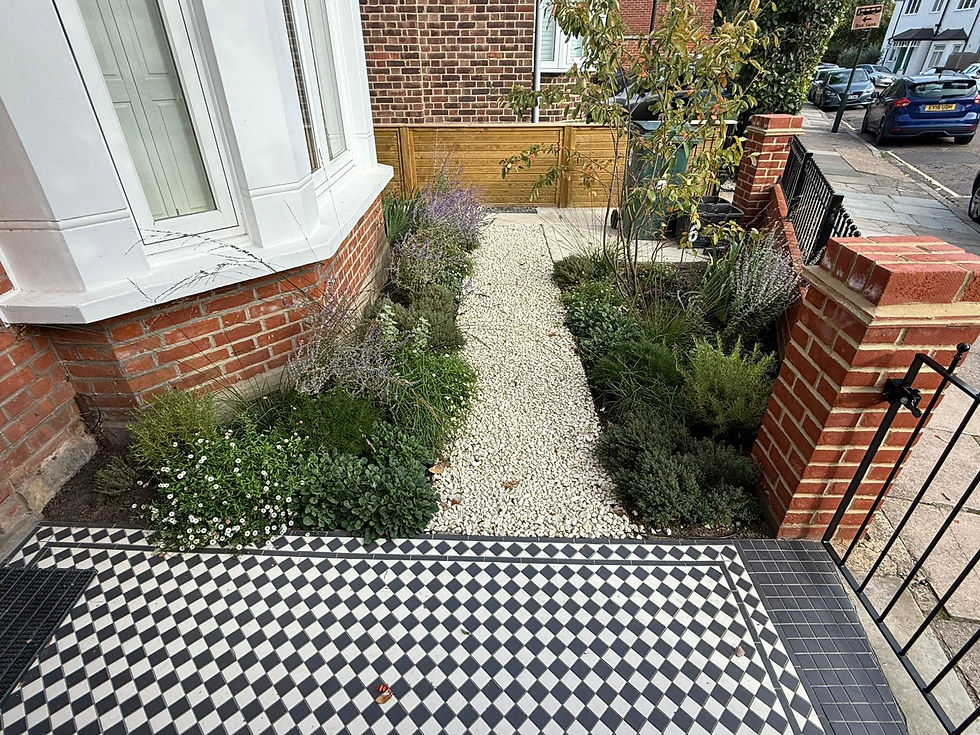
Contemporary naturalistic design successfully integrates modern concepts with soft naturalistic planting and traditional materials, creating gardens that are aesthetically striking, low maintenance, and highly sustainable. This approach proves particularly sympathetic to Edwardian and Victorian properties, where the formality of the architecture can be softened through naturalistic planting whilst maintaining the essential character of the period.
The partnership between Edwin Lutyens and Gertrude Jekyll exemplified how naturalistic planting could be wedded to geometric design in a balanced union, creating gardens that married house and garden in harmony. This historical precedent provides valuable guidance for contemporary family gardens in our area.
Common reasons to rethink your borders:
Overgrown shrubs that have lost their shape
Gaps in seasonal colour or structure
High maintenance needs that no longer fit your schedule
Desire to attract more pollinators and wildlife
Outdated planting styles
Refreshing doesn’t mean starting over—it’s about curating what you have and layering new life around it.
Understanding Your Soil:
No two Kingston gardens have the same soil. Older gardens often have rich, workable clay-loam. Newer developments may have thin topsoil over compacted London clay.
Clay is nutrient-rich but slow-draining. We improve structure with organic matter, avoid over-digging, and use deep-rooted, clay-tolerant plants:
Red bistort (Persicaria amplexicaulis ‘Firetail’)
Black-eyed Susan (Rudbeckia fulgida ‘Goldsturm’)
Sneezeweed (Helenium autumnale ‘Moerheim Beauty’)
Jerusalem sage (Phlomis russeliana)
Feather reed grass (Calamagrostis × acutiflora ‘Karl Foerster’)
Cranesbill (Geranium ‘Rozanne’)

Sandy Soils
Closer to the river, some gardens have sandy soil that drains too fast. We enrich with compost, mulch generously, and choose drought-tolerant species:
English lavender (Lavandula angustifolia)
Yarrow (Achillea millefolium ‘Terracotta’)
Mexican feather grass (Stipa tenuissima)
Naturalistic Planting Principles, Working With Layers
Back Layer: Tall grasses (Calamagrostis, Molinia) and perennials (Verbena bonariensis, Veronicastrum virginicum)
Middle Layer: Flowering perennials (Echinacea, Salvia, Rudbeckia, Helenium)
Front Layer: Groundcover (Geranium ‘Rozanne’, Alchemilla mollis, Sesleria autumnalis)
Plant in Drifts
Use groups of three, five, or seven of each species for harmony and cohesion—not scattered single
specimens.
Design for Year-Round Structure
Choose 70% of plants for form and foliage, not just flowers. Jerusalem sage, switch grass (Panicum virgatum), and sea holly (Eryngium planum) hold their shape through winter.
Celebrate Seasonal Change
Leave seed heads standing through winter—they glisten with frost, feed birds, and reduce maintenance.
Evergreen Structure and Hero Plants
Evergreens
Yew (Taxus baccata)—hedging or clipped forms
Sweet box (Sarcococca confusa)—glossy leaves and winter scent
Photinia (Photinia × fraseri ‘Red Robin’)—vibrant new growth
Small Trees
Broad-leaved cockspur thorn (Crataegus persimilis ‘Prunifolia’)
Crab apple (Malus transitoria)
Juneberry (Amelanchier lamarckii)
Himalayan birch (Betula utilis var. jacquemontii)
Hero Plants
Bold, sculptural accents used sparingly:
Maiden grass (Miscanthus sinensis ‘Malepartus’)
Jerusalem sage (Phlomis russeliana)
Red bistort (Persicaria amplexicaulis ‘Firetail’)
Coneflower (Echinacea purpurea)
Colour Palettes Entertainment Areas
Natural Harmony: Soft greens, silvers, and pinks
Warm and Lively: Reds, oranges, and deep purples
Calm and Contemporary: Whites, blues, and grasses
Beyond Borders: Complete Garden Features

Entertainment Areas
Natural stone or porcelain paving
Outdoor cooking spaces
Integrated seating
Pergolas and structures
Timber or steel pergolas supporting climbing roses (Rosa), wisteria (Wisteria sinensis), clematis, or honeysuckle (Lonicera periclymenum)
Relaxation Spaces
Garden rooms with intimate planting
Water features—ponds, rills, wildlife pools
Garden lighting for evening enjoyment
Screening
Contemporary fencing or traditional closeboard
Native hedging—beech (Fagus sylvatica), hornbeam (Carpinus betulus)
Trellis with climbers
The Flourish Process
1. Assessment: Study soil, drainage, and existing planting
2. Design: Create a plan fitting your home’s architecture and lifestyle
3. Implementation: Improve soil, plant carefully, mulch generously
4. Aftercare: Guide you through first-year maintenance
Ready to Refresh Your Garden?
Flourish Landscaping brings local knowledge, horticultural expertise, and design flair to every project in Kingston, Surbiton, and south-west London. Contact us to arrange your free consultation:
Flourish LandscapingExpert Garden Design, Landscaping, and MaintenanceKingston upon Thames | Surbiton | South-West London
All plants chosen for proven performance in south-west London conditions


Comments