Garden centres
How to get the best out of your local garden centre visits.
If you enjoy gardening, whether that means planting out borders, refreshing containers or just browsing for something new, a good garden centre is one of the most useful resources you have. Here in South West London and Surrey, we are well served. The best of the local centres carry serious horticultural depth, and a visit done well can transform the way a garden looks in a single season.
This guide covers the garden centres we know best across our patch, what to look for when you are plant shopping, when to buy what across the year, and how to make sure you come home with the right plants rather than a trolley of impulse buys.
Garden centres we know across South West London and Surrey
These are the local centres we visit most often. Each has its own strengths, and the right one for your trip depends on what you are looking for.
Petersham Nurseries (Richmond)
Curated and elegant, with rare and high-quality plants, particularly strong on unusual perennials and ornamental specimens. Worth the trip when you want a focal plant with personality rather than something straight off a standard nursery list.
The Palm Centre (Ham, near Richmond)
The go-to for architectural and exotic planting, with one of the strongest collections of palms, tree ferns, bamboos and Mediterranean and subtropical species in the South East. Particularly useful if you are aiming for the kind of bold, structural look that defines tropical or contemporary planting schemes.
Squire’s Garden Centre (Long Ditton)
A reliable all-rounder with good range, knowledgeable staff and well-cared-for stock across the seasonal categories. Generally where we send clients first when they want a sensible default centre with a proper plant section rather than a gift shop attached to a few plants.
Court Farm Garden Centre (Worcester Park)
A friendly local centre with a good plant selection and café. Smaller scale than the big-name operations but reliable for the bread-and-butter of seasonal shopping: bedding, perennials, soil improvers, pots and basic tools.
Kew Gardens Plant Centre
Unique plants and gift-worthy finds inside one of the world’s most respected botanic gardens. Smaller than a full garden centre but consistently interesting if you want plants you will not find anywhere else, and the kind of cultivars that have horticultural pedigree behind them.
Chessington Garden Centre
Spacious and well-stocked with strong seasonal plant and shrub ranges. Easy to navigate, good for a comprehensive single-trip shop when you have a list of mixed planting types to find in one go.
Each centre has its strengths, and all offer more advice, variety and quality than a supermarket shelf.
What about supermarket plants?
You will often see herbs, bedding plants and shrubs in supermarkets and DIY stores. These can be useful for short bursts of seasonal colour in pots, but they are rarely the healthiest stock and they are almost never selected with growing conditions or long-term performance in mind. For anything structural or lasting, we recommend a proper garden centre or nursery, where you can expect plants suited to your conditions, proper labelling and growing advice, and healthier, better-cared-for stock.
How to judge plant quality before you buy
A healthy plant in the garden centre is far more likely to thrive in your garden than a struggling one. Five things to check before any plant goes in the trolley:
- Roots. Tip the plant out gently. Healthy roots are pale (white or cream), well distributed through the compost, with no dense circling at the pot edge. A plant that’s pot-bound (roots wound tightly round and round) has been in the pot too long and will struggle to establish. Brown or black mushy roots indicate rot.
- Foliage. Even green colour for the species, no yellowing (unless seasonal), no brown crispy edges, no obvious holes or sticky residue. Check the underside of leaves for aphids, scale insects or whitefly.
- Compost surface. No moss, no liverwort, no thick mat of weed seedlings. These indicate the plant has been sitting in stock for many months. A clean compost surface means recent arrival or attentive nursery care.
- Form. For shrubs and trees, look for balanced shape with no large pruning wounds or broken branches. Bushy plants should be well-furnished from the base, not bare-legged.
- Buds versus flowers. For most flowering plants, choose specimens with plenty of buds rather than full open flowers. The buds will open in your garden; the open ones at the nursery are already past their best.
What to buy when: seasonal planting tips
Different parts of the year suit different planting tasks, and walking into a garden centre with the right month in mind helps you focus on stock that will actually establish well.
Spring (March to May)
- Plant: perennials, shrubs, evergreens and roses.
- Sow: lawn seed, hardy annuals, vegetables.
- Do: mulch beds, weed, feed perennials and divide overgrown clumps.
- Look for: Lupinus, Clematis, Salvia, soft fruit.
Summer (June to August)
- Plant: summer bedding, ornamental grasses, sun-lovers.
- Do: deadhead, water early in the day, feed pots and containers.
- Look for: patio plants, seasonal bedding for statement colour, pots and hanging baskets.
Autumn (September to November)
- Plant: spring bulbs (Tulipa, Narcissus, Allium), trees, perennials. See our autumn bulb planting guide.
- Sow: spring-flowering wildflower seed, autumn lawn renovation seed.
- Apply: moss killer, autumn or winter lawn fertiliser (low nitrogen), top dressing.
- Do: divide perennials, rake leaves, cut back where needed, scarify and aerate lawns.
- Look for: bulbs, ornamental grasses, and early bare-root or rootballed trees and shrubs.
Winter (December to February)
- Plant: bare-root hedging, trees and roses.
- Do: prune trees (dormant-season pruning), mulch beds, plan new layouts.
- Look for: evergreens, structure plants, tools and quality compost.
How to prepare for your garden centre trip
We have all gone to the garden centre for “just a few bits” and come back with a trolley full of impulse buys. The following steps make it much more likely you will leave with the right plants rather than the most photogenic ones.
Walk round your garden first
Spot the gaps and the struggling plants. Take note of sun and shade, dry and damp zones (your phone has a compass on it if you are not sure of aspect). Think about what is missing in terms of colour, height and texture. A useful rule of thumb is that around 30 to 40 per cent of your planting should be evergreen so the garden still has structure through winter, though this varies with style. Our Flourish Sun Planner is a good place to start if you are unsure of aspect across your plot.
Get inspired before you go
Save a few reference images to your phone. Useful starting points include the RHS Plant Selector (search by height, soil and season), Gardeners’ World planting guides (seasonal tips and planting combinations), Pinterest (mood boards and real garden borders), and Instagram for tagged layout ideas and colour themes. Our own garden styles guide is another useful reference for clarifying what you are drawn to before you start choosing plants.
Think in layers and themes
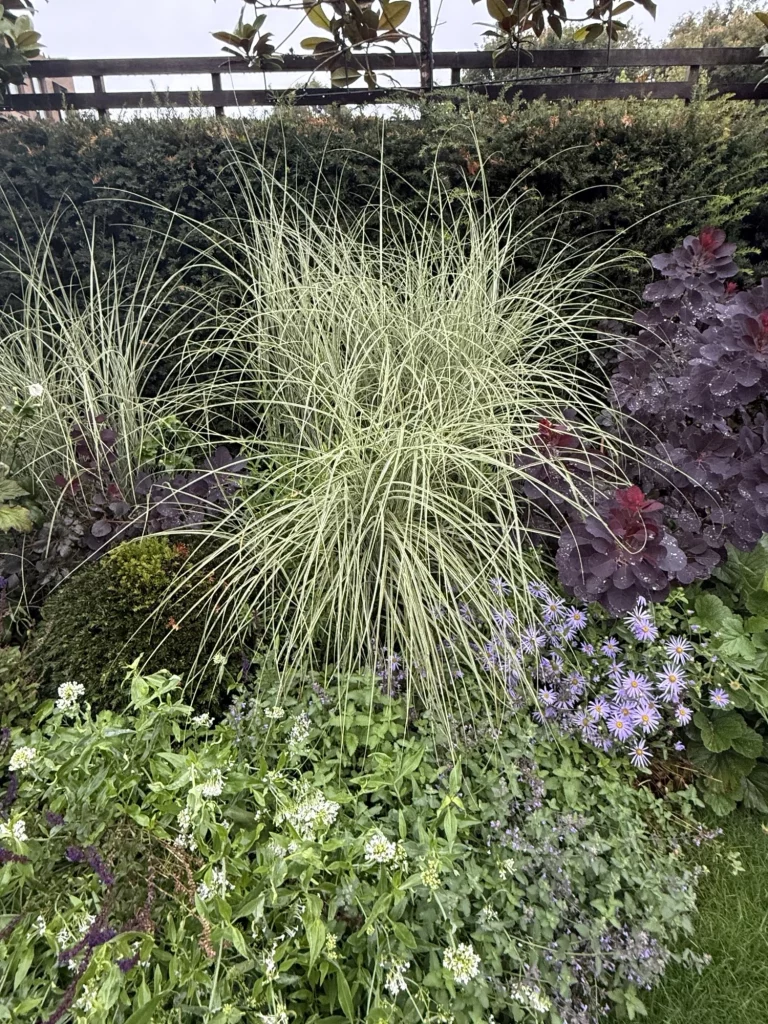
Good planting works in layers: tall structure (shrubs, ornamental grasses, multi-stem trees), colour bursts (perennials and bulbs), and fillers and groundcover. Combine those layers with a clear theme, whether that is wildlife-friendly, Mediterranean, naturalistic or low-maintenance, and the borders read as coherent rather than random. Our naturalistic planting guide goes into more depth on the three-layer framework.
Take measurements and set a budget
Knowing how much space you are working with and how much you want to spend keeps your trolley and your bank balance under control. A planting scheme without rough measurements will almost always come out either too sparse or too crowded by year two.
Make a list (or a wish list)
Even a rough list focused on actual planting goals (fill a shady gap, add summer colour to a back border, soften the patio edges) helps you stay focused while you shop and avoid the impulse-buy spiral.
Ask for advice
Good garden centres have knowledgeable staff who know the stock well and understand what does well locally. Asking before you buy avoids most of the common mistakes, and it is the single most under-used resource in a garden centre.
Want to do the planting yourself but not sure what to buy?
We can help with that too. Our planting design service produces a tailored planting plan for your garden, matched to your space, soil, aspect and style. The plan gives you a confident, purposeful list and layout to take to the garden centre, so you get all the enjoyment of browsing and planting without the guesswork.
If you would like a hand with the parts that are harder to do alone, we can install larger trees and shrubs to give your garden structure and immediate impact, prepare beds and borders so you can get straight to planting, and place key plants so your layout looks professionally composed. You stay hands-on, but with expert backup at the moments that matter most.
Frequently asked questions
What’s the best month to visit a garden centre?
Late March and April for perennials, shrubs and roses; late September and October for spring bulbs, bare-root trees and hedging; mid-summer for bedding and patio plants; midwinter for tools, compost and structural evergreens. The trick is matching the visit to the planting season — buying summer bedding in March will leave it sitting on a windowsill until the soil’s warm; buying bare-root trees in June means there’s no stock to choose from.
How can I tell if a plant is healthy at the garden centre?
Check five things: roots (pale, well-distributed, not circling the pot tightly); foliage (even green colour, no pest residue on undersides); compost surface (no moss, weed seedlings or thick liverwort, indicating long storage); form (balanced shape, well-furnished from base, no large pruning wounds); and bud-to-flower ratio (more buds than open flowers is better — the buds open in your garden). Don’t be shy about tipping a plant gently out of its pot to inspect the roots — any good garden centre expects this.
What’s the difference between bare-root and containerised plants?
Bare-root plants are lifted from a field nursery and sold without soil during the dormant season (typically late October to early April for the UK). They’re significantly cheaper, establish faster than equivalent container-grown stock, and travel and store easily. The catch is the limited season — they must be planted promptly while dormant. Containerised plants can be planted year-round but cost more, often look heavily root-bound by the time they reach the shop, and establish more slowly. For hedging, roses, fruit trees and most ornamental trees, bare-root is the better choice if you can plan ahead.
Are end-of-season sales worth the savings?
Often, yes. Late summer sales on shrubs, perennials and trees can offer 30-50% discounts, and the plants are usually still perfectly good — just past their peak display window. The honest caveat: stock has been sitting around for the full season, so the plant quality checks above matter even more. Reject anything that looks tired, pot-bound, or pest-affected; happily buy anything that’s simply finished flowering. Bulb sales in late October and November are particularly good value — same bulbs, much-reduced prices because the main rush is over.
Should I buy big specimens or smaller plants?
Depends on what you’re after. For instant impact (a single specimen tree, structural shrubs, anything visible from a key window), buy as large as your budget allows — the difference between a 3L pot and a 15L pot can mean five years of growth on day one. For drift planting in borders, smaller is often better — three or five 2L perennials catch up to one 5L plant within a season, and you get more plant per pound spent. A useful working rule: buy big for structure, buy small for filler.
Can I take plants home in a normal car?
Most plants, yes. Cover the boot or back seat with a tarpaulin or plastic sheet, lay plants on their side if they won’t fit upright (most plants tolerate this for an hour or two), and water them before you load if it’s a hot day. Anything more than about 1.5 m tall, very wide, or bare-rooted needs more care — ask the centre about delivery, which most offer for a reasonable charge on larger items. Don’t leave plants in a hot car while you have lunch — five minutes is fine, an hour can kill foliage on a warm day.
Make the most of your garden centre visits
Whether you are updating a few containers or planning a full border makeover, a well-planned garden centre visit is genuinely worth the time. For related reading, see our companion guides on naturalistic planting, spring bulbs and autumn and winter pot planting, all of which lean heavily on the kinds of plants you’ll find at the centres listed above.
If you would like a planting plan to take with you, or help installing the bigger structural plants once you have made your choices, please get in touch to start a conversation.