
Rear garden transformation in Hersham, Weybridge
Initial conditions
This Hersham garden had retained much of its 1970s character, and not in a good way. Large conifers dominated the boundaries, casting heavy shade and compressing the usable space. The lawn was moss-ridden and uneven, concrete paving had dated badly, and planting consisted mostly of shrubs that had long outgrown their intended scale. The garden felt closed-in and underused, despite having enough space to function well for a family.
Client brief
The new owners wanted a complete reset: open lawn for children, productive vegetable beds, a proper dining terrace and planting that supported wildlife without becoming high maintenance. The garden needed to feel lighter, more welcoming and clearly connected to the house.
Key features:
– Removal of the conifer hedge
– Installation of a bespoke paving
– Indian sandstone paving
Process highlights
Design approach:
Selective removal of boundary conifers restored light and revealed the garden’s true proportions. The layout was reorganised into functional zones rather than one continuous expanse – open lawn for play, raised beds in the sunniest position for vegetables and a York stone terrace close to the house for dining. Planting combined native structure from Cornus sanguinea and Viburnum opulus with pollinator-friendly perennials such as Echinacea purpurea and Verbena bonariensis. A small wildflower strip reduced mowing while increasing biodiversity.
Construction details
Following clearance and stump grinding, the lawn area was rotavated and levelled with imported topsoil where required before new turf was laid. The York stone terrace was built on a properly compacted sub-base to ensure stability on clay soil. Raised vegetable beds were constructed from timber sleepers and filled with blended topsoil and compost for immediate productivity. Mixed native hedging replaced failed fencing, providing screening and ecological value in equal measure.
Results
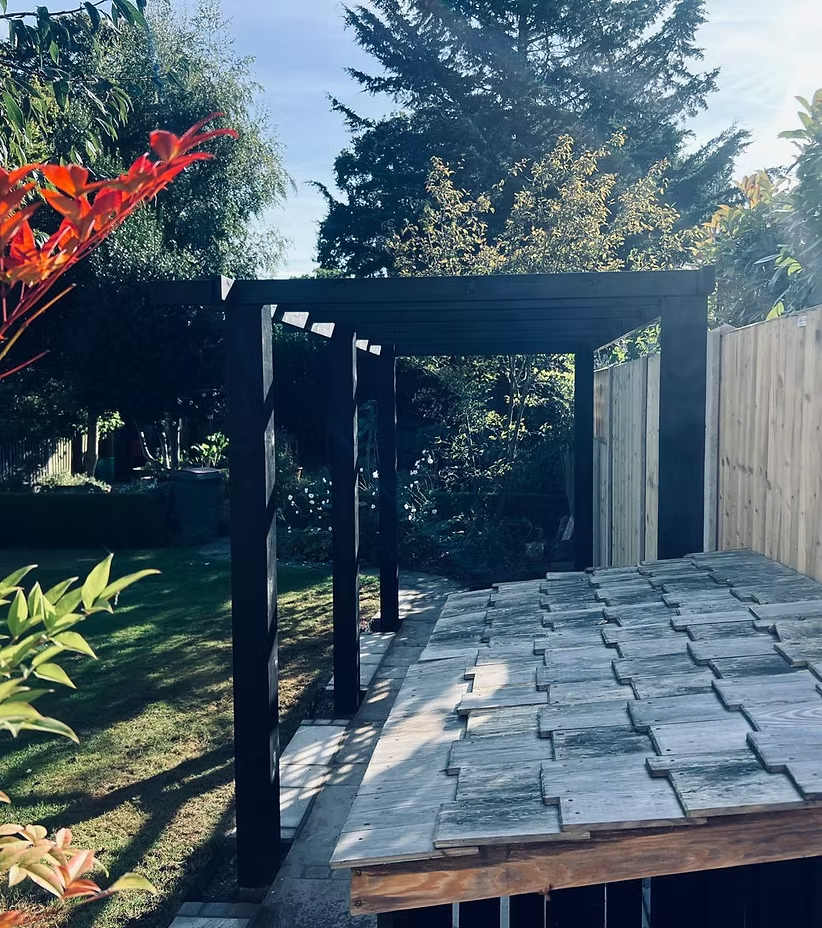
The garden now functions as everyday family space rather than a neglected backdrop. Light levels improved, grass established reliably and the vegetable beds became genuinely productive. The naturalistic planting has attracted visible increases in pollinators and bird activity, while maintenance remains manageable. What had been dated and enclosed now feels open, practical and alive, supporting both family routines and seasonal change without fuss.